
How INMO Built a $146K+ U.S. Acquisition Engine in Its First Seven Weeks
INMO entered the U.S. with a premium smart-glasses product, limited local advertising history, and a customer journey that needed more than one touchpoint. 4XDigital built a full-funnel acquisition system across Meta and Google — generating more than $146K in revenue and reaching 500K+ people.
.png)
A premium product, an unfamiliar market, and a customer who needed more than one look.
INMO makes AR smart-glasses — the Air3 and GO3 — built around a full-color waveguide display, hands-free connected experiences, and AI-driven features like real-time translation and turn-by-turn navigation. Entering the U.S. with a product priced above $1,000 meant advertising had a harder job than driving clicks.
New brand, no U.S. history
Most potential customers didn't already know INMO. The business needed to introduce itself while generating revenue at the same time — with limited U.S.-specific advertising history to build from.
An extremely competitive category
Consumer electronics is one of the most competitive advertising categories on the planet. INMO was up against larger media budgets, stronger brand recognition, and mature advertising accounts. Simply showing the product wasn't enough.
A high-consideration purchase
At $1,000+ with real technical complexity, the buyer needed to understand what the product does, why it's different, and whether it's worth the price — before they were ready to buy.
You can't optimize a high-consideration product like an impulse purchase.
If someone is unfamiliar with both the brand and the product category, asking for an immediate $1,000+ purchase is a large leap. Advertising needed to do more than chase conversion — it needed to move people through stages of understanding. Each stage needed a different job — and the system needed to understand how those stages worked together.
One platform. Four different customer states.
Rather than running one campaign and judging it against a single ROAS number, 4XDigital built a complete AIDA structure on Meta — with each stage doing a distinct job in the buying journey.
Make INMO known
Top-of-funnel campaigns introduced the brand to large new audiences — reaching more than 426,000 people in the first week live. The goal wasn't an immediate purchase from every viewer; it was creating the audience signals everything downstream would depend on.
Find the people leaning in
Interest-stage campaigns targeted consumers showing stronger engagement — moving beyond passive awareness toward active consideration.
Build purchase consideration
Desire-stage campaigns addressed audiences deeper in the funnel with stronger intent signals — giving them more reason to move toward purchase.
Convert the strongest intent
Bottom-of-funnel advertising focused on turning the strongest demand signals into purchases. Not every customer was treated as if they were at the same stage — that's the core strategic distinction.
A premium product justifies its price through what it can actually do.
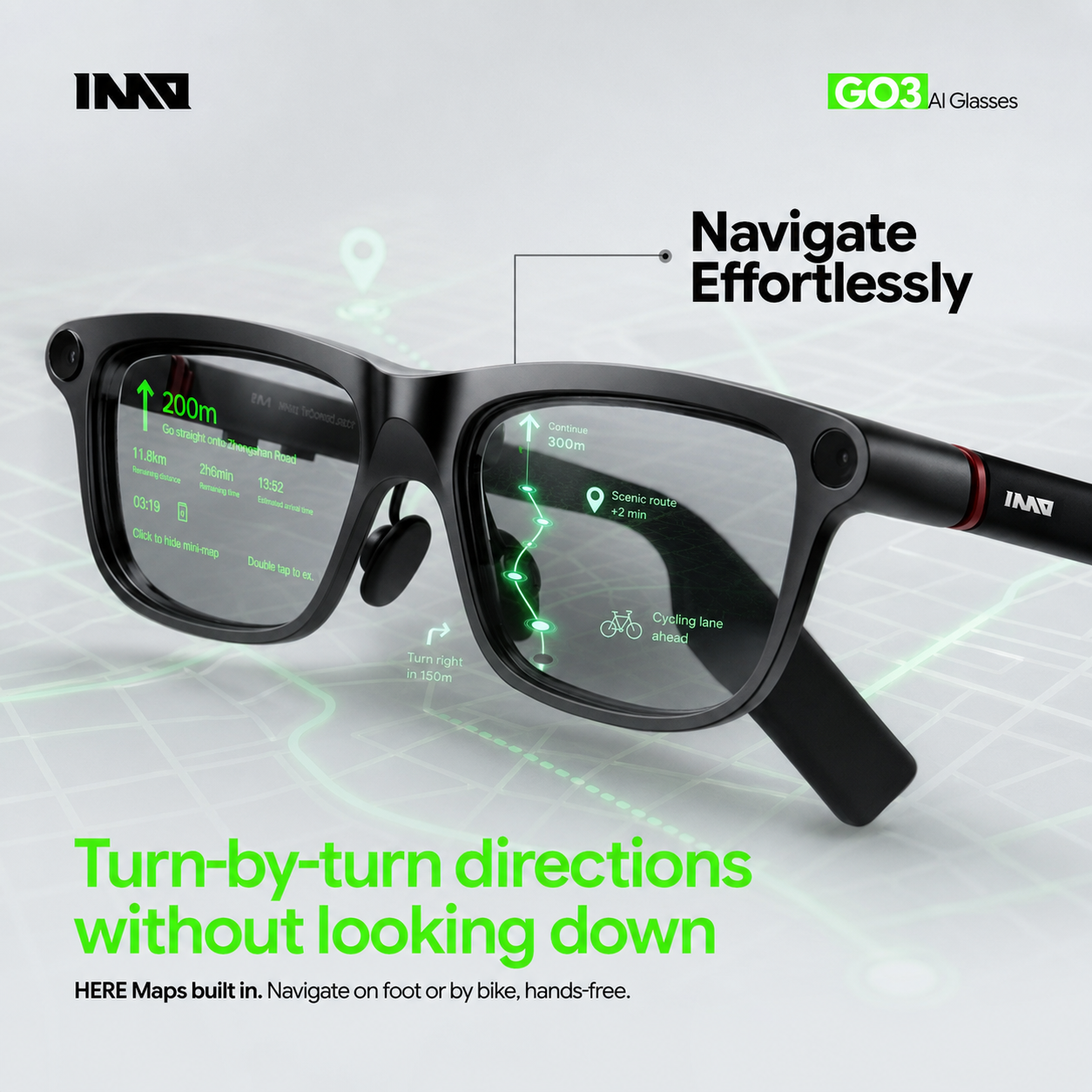
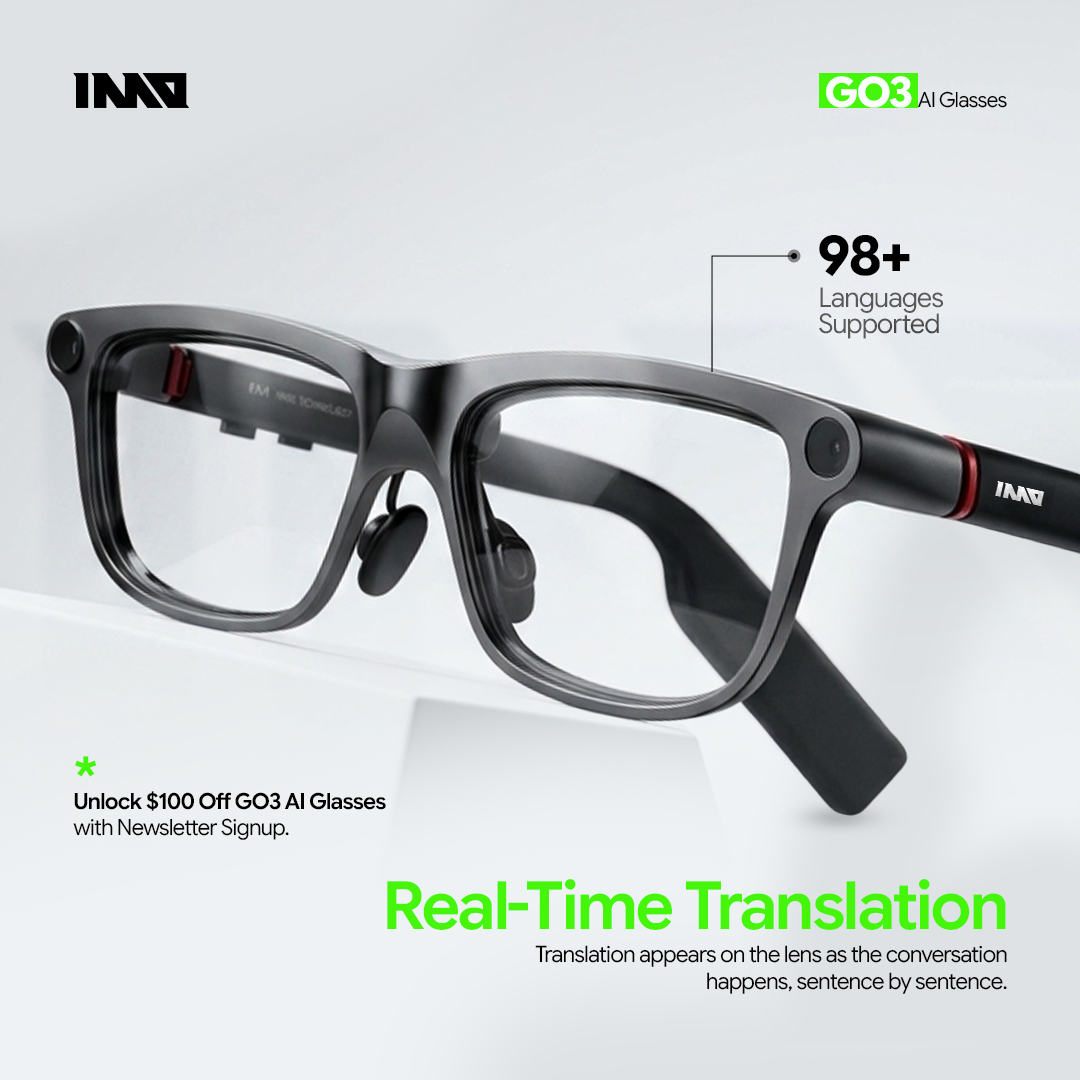
INMO's AR glasses ship with real-time translation across 98+ languages and hands-free, HERE Maps-powered navigation — the kind of feature depth that gives a middle-of-funnel audience a reason to keep paying attention.
.png)
Google had a different job at every level too.
The Google strategy spanned multiple formats — each supporting a different part of the same buying journey rather than operating as isolated campaigns.
Create additional discovery
Top-of-funnel exposure beyond Meta's reach.
Capture product & shopping intent
Conversion-oriented discovery across Google's inventory.
Capture explicit demand
Placement in front of people showing active intent.
Expand product exposure
Incremental traffic and reach across the funnel.
One customer journey. Multiple signals.
- Meta Awareness
- Google Demand Gen
- YouTube / Display
- Meta Interest
- Product engagement
- Meta Desire
- Google PMax
- Search behavior
- Meta conversion
- Search / PMax
A full funnel creates more signals. The challenge is knowing what they mean.
Awareness metrics, engagement, clicks, CTR, purchases, ROAS, audience behavior, channel performance — a complex account like this generates an enormous amount of data. The problem was never a lack of data. It was knowing which signals mattered, which funnel stage needed attention, and which changes were normal learning versus something that required intervention.
Remember what INMO's launch teaches us
Every week of the launch made the system more informed about how INMO's U.S. funnel behaves.
- Funnel-stage & channel performance
- Historical ROAS and CTR
- Which campaign structures performed more efficiently
INMO shouldn't discover every launch lesson alone
A new U.S. account has relatively little U.S.-specific history. Broader advertising patterns help interpret a new account before it has years of its own data.
- How a high-consideration funnel should be structured
- Which stages may need more time to mature
- What performance patterns are normal during a new launch
Turn the funnel intelligence into action
Building and running the Meta AIDA funnel, Google Demand Gen, PMax, Search, and YouTube/Display — while monitoring performance across every funnel stage.
- Monitoring ROAS and CTR by stage
- Supporting newer campaign types through learning periods
- Rebuilding momentum after the budget pause
Not every campaign needed to win at the same time.
A full-funnel account shouldn't be judged solely by asking "which campaign has the highest ROAS today?" Some campaigns exist to create awareness. Some build consideration. Some capture purchase intent. Meta's Interest and Desire stages became the efficiency leaders — at 1.74X and 2.26X ROAS respectively — while newer campaign types like Promotional, Catalog, and Creators were still progressing through their own learning curves.
A strong advertising system knows the difference between a campaign that is learning and a campaign that is failing.
Then the launch hit a reset.
In late July, the account experienced a deliberate mid-campaign budget pause that interrupted momentum. Spend resumed on August 10 — and the account had to re-enter the market and rebuild its trajectory.
A pause shouldn't erase everything the account already learned.
Even when campaign delivery is interrupted, the business itself has already generated knowledge — what the funnel looked like, which stages were performing, which channels were producing results, and what strong CTR looked like before the interruption. The account may re-enter a learning period. The business shouldn't have to forget its history.
CAMPAIGN PERIOD: JUL 1 – AUG 19
The funnel needed enough discovery at the top to create the audiences and signals required farther down. Week 1 alone drove $3,624 in spend against $10,953 in revenue — a 3.02X combined ROAS, showing the account found profitable traction quickly rather than needing months to prove itself.
.png)
Performance began rebuilding.
Since spend resumed on August 10, Google delivered a 1.33X ROAS and a 4.27% CTR — described as Google's best CTR of the month. Meta purchase pace was also recovering week over week. The account was rebuilding momentum, not claiming a complete recovery.
$146K+ generated in seven weeks · full-funnel build from scratch
If your customer needs more than one ad to decide, is your advertising built to understand that journey?
A funnel built to learn — not just launch.
INMO's acquisition engine had to introduce a new brand, educate a high-consideration customer, build middle-funnel interest, capture purchase demand, adapt when momentum was interrupted, and keep learning as the campaign matured — all at the same time.
High-consideration products need more than a conversion campaign.
A customer may not buy a premium technology product the first time they see it. That doesn't mean the first impression had no value. A strong acquisition system understands that customer intent develops over time.
- Create enough awareness
- Identify who is leaning in
- Give those customers more reason to believe
- Capture them when purchase intent develops
- Learn which parts of that journey are working
Your customer journey probably isn't one click long either.
Higher-consideration products create a different advertising challenge. Customers need time, information, repeated exposure, and a reason to move from curiosity toward purchase. 4XDigital combines what it learns about your business with broader advertising intelligence and AI-driven execution to help understand and manage that journey across channels.
"Launching a premium technology product in a new market requires more than simply running conversion ads. 4XDigital helped us build the full customer journey and understand what was working at each stage."
Your best customers deserve more than one impression.
4XDigital helps businesses understand what happens between first impression and purchase — learning which channels, audiences, and funnel stages are creating meaningful progress, then combining that with broader advertising intelligence and AI-driven execution to make the next decision smarter.
Start 30-day Free Trial.svg)

