
What Duolingo, Surreal, Squatty Potty and Liquid Death Get Right About Storytelling
Four very different brands, four very different products, and one thing in common: they gave people something more memorable than a product benefit.
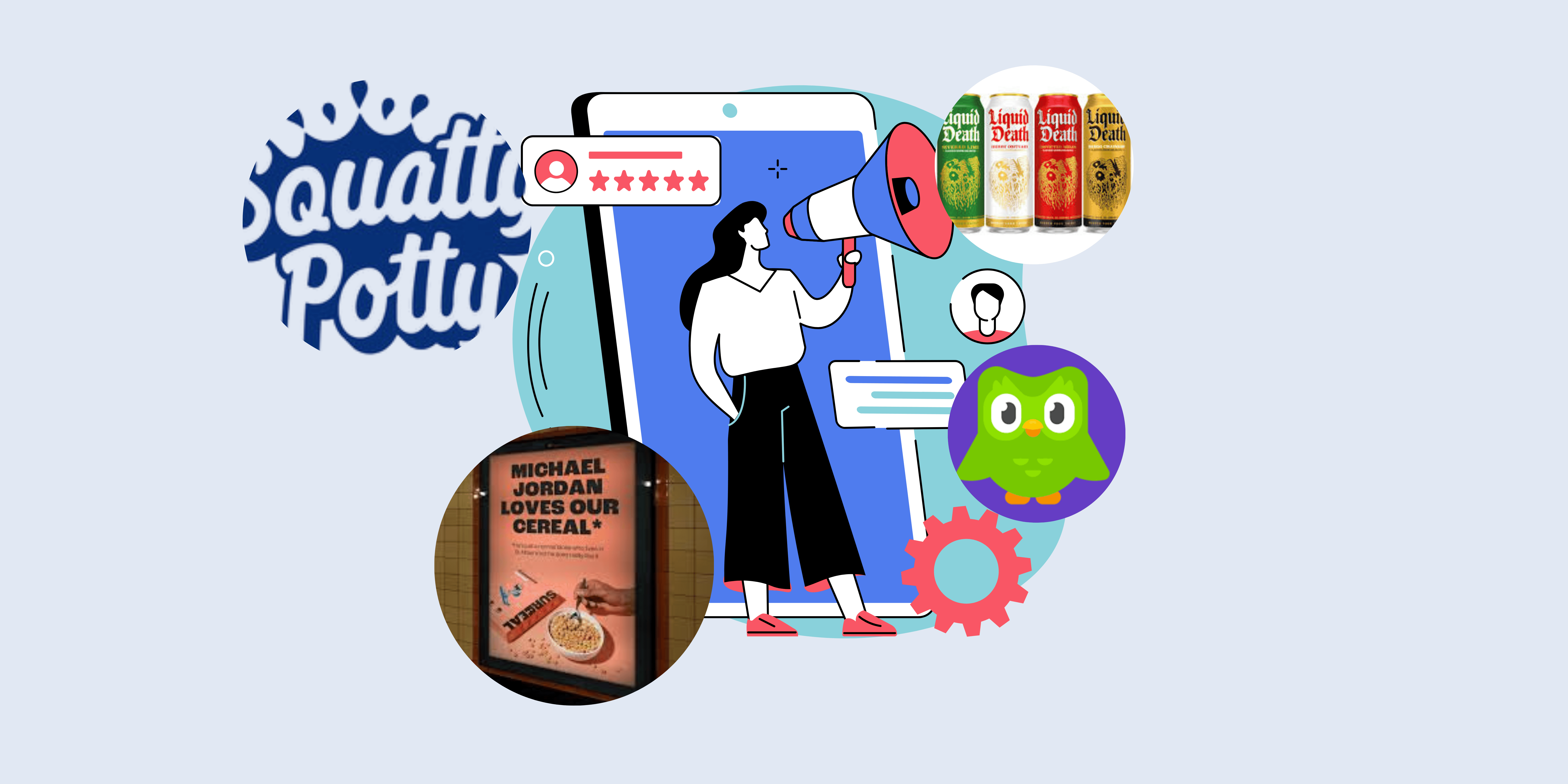
Most small businesses do not struggle to explain what they sell. The harder part is giving people a reason to remember who sold it.
That is where storytelling becomes useful. Not in the dramatic brand manifesto sense, but in the much more practical sense of giving a business a recognizable personality, point of view and way of showing up.
Duolingo, Surreal, Squatty Potty and Liquid Death are useful examples because none of them started with a product that automatically comes with a big story. One teaches languages. One sells cereal. One sells a bathroom stool. One sells canned water. Yet each found a way to make the marketing itself part of what people remember.
The mascot became a character people actually follow
A language learning app could easily have stayed in the world of productivity, streaks and educational benefits. Duolingo went somewhere else.
Over time, Duo stopped feeling like a logo with feathers and started behaving like somebody with a personality. The owl is clingy, dramatic and far too invested in whether people have completed their lesson. Once the audience understood that personality, Duolingo had somewhere to keep taking the story.
That is why the “death of Duo” stunt worked. It did not feel like one strange post appearing out of nowhere. It felt like another chapter in a joke the audience had already been part of for years.
The useful lesson for a smaller business is not to invent a mascot. It is to give the brand enough consistency that people begin to recognize how it behaves before they even see the logo.
The category itself became part of the joke
Cereal advertising already comes with a familiar language. Bright packaging, energetic mornings, health claims and plenty of enthusiasm. Surreal seems very aware of all of it, and that awareness gives the brand something to play with.
Its advertising is often dry, self aware and deliberately less polished than the category expects. The famous name endorsements are a good example. Surreal used ordinary people who happen to share names with celebrities, including names such as Michael Jordan and Serena Williams.
The audience understands the joke immediately. Nobody is being asked to mistake these people for actual celebrity endorsers. The fact that they obviously are not is the entire point.
For a small business, there is something useful in that. Sometimes distinctiveness comes from noticing the habits everyone else in the category has accepted and deciding not to repeat them.
The best brand stories do not sit on top of the product. They make the product easier to notice, talk about and remember.
Humor made an awkward product easier to talk about
Squatty Potty had a very obvious marketing problem. The product is useful, but bathroom posture is not exactly a subject most people are waiting to discuss.
Instead of trying to make the subject more clinical, the brand went in the opposite direction. Its famous ad used a medieval prince and a unicorn producing rainbow ice cream to explain what the product does.
It is absurd, but that is why it works. The humor gives people permission to stay with a subject they might otherwise avoid.
The bigger lesson is that the creative choice solved a real communication problem. Humor was not there simply because the brand wanted to look funny.
Water was made to feel like it belonged in a different category
Water advertising has spent decades teaching us what it is supposed to look like. Clear bottles, mountains, wellness and calm people doing healthy things.
Liquid Death ignored most of that visual language. The tall cans, heavy metal influence, aggressive humor and deliberately overdone copy feel closer to beer, music culture or energy drinks than bottled water.
That contrast became the story. The product itself is straightforward. The brand around it is not.
For a smaller business, the useful question is not how to become the next Liquid Death. It is whether the category has trained everybody to look and sound the same.
If every competitor speaks with the same polished voice, a warmer or more direct one may stand out. If everyone is playful, restraint may feel more confident. The point is to decide what role the brand wants to play in the category and then behave like that choice matters.
You do not need their budgets. You need the discipline behind the ideas.
Before choosing a campaign idea, decide what kind of personality people should experience when they encounter the business. The strongest examples above work because the tone is consistent enough to feel intentional.
A recurring character, tone, visual behavior or way of speaking becomes more useful as it repeats. Recognition is usually built over time, not in one campaign.
Squatty Potty used humor because the category was awkward. Surreal played with advertising conventions because cereal advertising is predictable. Liquid Death borrowed the codes of other categories because water is difficult to make distinctive.
The goal is not to shock people for attention. A strong story should make the product easier to recognize, understand or care about. If the stunt is remembered but the business is not, the creative has done the wrong job.
The creative gets stronger when the business remembers what people responded to.
Most businesses do not begin with a fully formed brand character or a campaign idea that becomes part of culture. They learn what resonates by creating, testing and paying attention to the patterns that keep appearing.
That is where Business Memory becomes useful. The message that worked six months ago, the creative people ignored, the audience that responded unexpectedly and the offer that consistently brought stronger customers should not disappear when a campaign ends.
Storytelling is still creative work. But the more a business understands what its customers have already responded to, the less every new idea has to begin from zero.
Make the creative memorable. Make the learning useful.
Create, launch, monitor, understand and improve your advertising with more context behind every decision.
.svg)

